Monday, August 10, 2020

To Play or Pandemic? Feelings Towards an Unknown Season.

When I was 18, and a Freshman with Penn State football, I would have done just about anything to be out on the field.  

Not even to play, just to dress.

As a walk-on, and a late one that made it via try-out, I had an incredible uphill battle.  

If I were to put myself in my 18 year old self, I would absolutely want to stay involved, and play a season.  I would sign a waiver.

I imagine, for those upperclassmen who may have waited years for this opportunity, they would do nearly anything to play.

I imagine that pretty much anyone who truly loves the game and has a near fanatical passion for it, would want to play.

The question becomes "Under what circumstances?"  

As long as the approaches and measures taken are what the players, the coaches, and support staff are comfortable with, then I can in good conscience support an attempt at a season.

HOWEVER,

I recognize we are in a pandemic state.

Over 160k have tragically passed in America to this novel Coronavirus.  

The only way any nation has been able to control the virus has been widespread adherence to social distancing and mask wearing combined with vigorous testing and contact tracing.

It appears to most in our academic and health care communities agree that having large crowds and doing nearly anything together over time greatly increases the risk.

If Penn State does value the opinions of doctors and academics, then I believe any kind of season will not have fans.

As a former letterman, mine (as well as others) have had their sideline privileges taken away (I have zero problems with this).

The players, coaches, and support staff must always feel safe and supported as well as their families.  If for this season, it is recommended there are no fans in seats then fine.

I honestly think they could play the games, tape them and play them later and all of America would still watch while knowing the results. Thats how starved I feel some people are for new athletic content.

Now, I also think people should also accept and be open to the idea that a season may start, stop and not have a clear champion.

We need to be OK with these potential scenarios as our collective health and well being are more important than one specific sport or game or thing.

If no one is sick, or getting sick, and things are improving, fantastic. 

If we move into November and an outbreak hits the offensive or defensive lineman rooms?

If the the support staff aren't properly equipped and they pass the disease to a loved one?

These are difficult times, and we need to be patient and support one another through everything.  I want those young guys to have fun.  To be able to show how hard they worked, not just this year, but for their whole life.

I love the guys out there asking to have a season just as much as I love Micah for deciding not to play and train in a more comfortable environment.  Both things can be true.

I think we can try to have some football on the players terms, but I think we as fans and as people, need to recognize that this is difficult and turn to our better angels of support and empathy at this time.

Monday, August 3, 2020

The Need To Teach America About The Evolution Of White Supremacy.

When I was in fifth grade, we were watching the series Roots in what became a startling show of the terror inflicted by white people upon the Black population they had kidnapped and forced into slavery. 

In the middle of the unit, our school day was interrupted as news spread about the Oklahoma City bombing. 

Timothy McVeigh killed 168 people, including 19 children.

At age ten, I had a hard time understanding what happened.  It seemed that everyone around me calmed me down by saying it was just the work of a crazy person.  He was just imbalanced, and just like that, I didn't really think about McVeigh again. 

I turned back to Roots, horrified at both the actions and inactions of people of history.  Believing and hoping we had moved on.

In 1999, I was a freshman in high school, when Eric Harris and Dylan Klebold murdered 13 people.

Again, the reasoning given was about the imbalance, about bullying and about the media.  There was considerably less importance placed on the obsessions about Hitler and far right ideas.

In 2015 Dylan Roof killed 9 people in a church after first praying with them, in an effort to start a race war. 

I thought it was just the act of a loner.

There was no talk about white supremacy anymore because, while all these events were happening around us, we were taught that essentially Martin Luther King Jr, along with Rosa Parks, solved racism in America. 

We were taught that racists were now only a very small minority; that they existed only in the past and that we had moved on. 

The idea of the KKK, of Neo-Nazis, and the idea of the far-right existing within America was simply not brought up as a realistic thing in my education. We were taught that they were simply a relic of the past and not worth our time.

I remember thinking American History X was just that.  A movie.

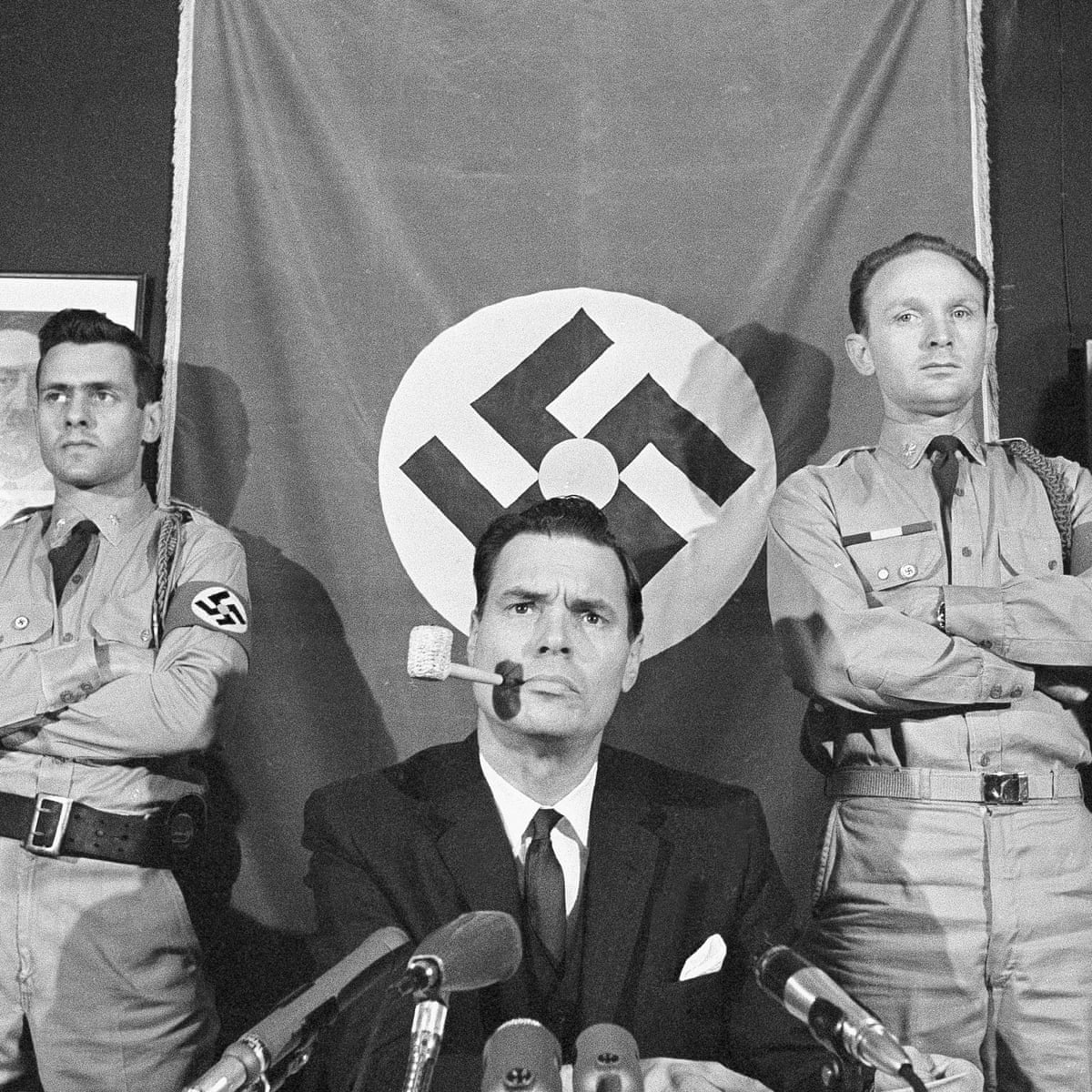
At no point, was I taught the name George Lincoln Rockwell, a former Navy man, and the founder of the American Nazi party, whose influence and ideas can be seen all over the far right and a person whose influence is still wreaking havoc long past his death. 


Louis Beam, likewise, was absent from my history books, even though he was a former member of the US military in Vietnam where he served as a helicopter door gunner, would come home to not only become a domestic terrorist as a member of the KKK, but then also built his own organized militia to promote racist military style trainings in kids as young as 8.  He is also credited with being one of the first proponents to a leaderless resistance strategy that is employed in many different factions.

This has done us all an incredible disservice from understanding where some ideas and thoughts come from.

The "free speech on college campus" idea isn't new.  But it's important to understand that Rockwell wanted to exploit that idea and was the first to do so.  It's also important to understand how Dr. Martin Luther King Jr., as well as others, did not play into his hand so as to diminish the power of the propagandist.

It's important to realize that both the El Paso shooter, and the Christchurch shooter both believed in a variation of the original lie of white genocide that Rockwell espoused.  They believed that the Jews are behind everything and that they are using blacks to carry out that will.

To this day, I'm guessing the great majority of Americans have no idea that the El Paso shooter, the Christchurch shooter, Louis Beam, Eric Harris, Dylan Roof and Timothy McVeigh all read the same book written by a Neo-Nazi named William Luther Pierce who was a direct associate of Rockwell. 

I believe we need to address this shortfall, as white supremacy is a real threat to democracy.  I believe the best tool is education.  We need to have the hard conversations, especially with our friends and family about where this hate has come from, what this hate sounds like, and why this hate has been so difficult to extinguish.

Easily the best source of information for me researching the bulk of this material has been the journalist Robert Evans.  While he had previously covered the Ukrainian Revolution of 2014 as well as the war in Iraq, he has spent the last few years reporting domestically and starting his own podcast called Behind The Bastards.

However it is his other Podcast, The War On Everyone that really spells out the role White Supremacy and Fascism has played in American Culture.

Evans absolutely has a bit of Hunter S. Thompson to his reporting, however he is great at citing sources, and giving greater context to things that might not be as readily apparent.  He is also honest enough to say when he simply does not know because he couldn't find any sources.

His dedication to revealing detailed information about some of the worst possible topics helps to illuminate our own world in a new light, and calls attention to our own biases and flaws.

These are trying times.  Confusing times.  But if we understand our past, it can help guide us in the present, and preserve a better future.


Thursday, July 30, 2020

4 Year Anniversary

As I entered the car, it became readily apparent that my best man was incredibly hung over.  He, as well as my other groomsmen had partied pretty hard at the bars we had worked at when we were younger.  Later I would find videos taken by the DJ of my best guys smashing shots and banging their heads as DJ Snake and Lil' Jon's "Turn Down For What?" blared all around.

"Dude, I'm sorry, but we gotta stop at this Minute Mart or this is not happening."

Here I was, held hostage for my own wedding, with the demands of electrolytes being the key bargaining piece.

Yet still, as the sky became more grey and the prospect of a thunderstorm occurring during our wedding became more likely, I still was calm.  I was still happy and excited.

I might be late today.  My best man might not live through the wedding. 

But I couldn't be bothered that day.

Today was my wedding day.


The ceremony was held indoors at Our Lady Of Victory, where we sheltered from the rain.  And inside, all I could think about was how special this moment was.  Where despite all the ugliness of the world, all the rain and thunder that shook outside the walls of the church; inside, there was only love and joy.

I thought about how my wife and I were kind of opposites in some ways.  She was Catholic.  I was an Atheist.  She came from a more conservative background from a smaller rural area.  I came from almost the heart of academia, with almost every family member connected to Penn State in some form or fashion.

Yet we loved each other deeply.  That for all the things that didn't seem to make sense about the world, this absolutely did.  In fact there was nothing I was more sure of in that moment.

We were surrounded in that moment with our trusted friends and family that could be there, and those that couldn't, were in our hearts.

We couldn't be hurt by the outside world.

Four years later, I'm happy that's still the case.

We are in the midst of one of the most challenging times in human history.  A pandemic.  Global political and civil unrest, and the real possibility that resources that were once plentiful, may become less so.  One could hardly be blamed for feelings of anxiety or depression.

Yet, despite all the difficulties and troubles, I'm able to find my happiness, my calm.  Because in my heart and in my home, I have my world.

I love you Allie.

Happy Anniversary. 

Love, Ben

Monday, July 20, 2020

Summer Softball During The Pandemic

I stand outside the dugout, pressed to the fence of the backstop yelling things that I think I used to yell when I was 12.  Doug takes a long stride and he nicks the ball after a loaded swing.  The ball flies up into the air for maybe half a beat, rising not much higher than Doug's own head and the catcher, a smaller, rather rotund man in his 50's catches the harmless ball. 

"Great stuff! Great stuff 1-5!" The catcher yells, as the pitcher, number 15, has delivered the exact same type of generic pitch every other slow-pitch softball pitcher has ever pitched.  A slow arcing corn hole toss landing in the general vicinity of home plate. 

Doug's head drops, but we cannot quite make out his entire expression as he has put up his face guard at home plate.  The words that seem to just make it out under his breath and his eyes show a look of sheer frustration.

It's incredibly hot out.  Somewhere in the mid 90's and humidity that seemed to have sprung out of nowhere.  I'm sweating through my jersey and taking practice swings, trying desperately to loosen enough muscles to where the swing actually feels natural and comfortable like it did when I was twelve.  I know I'll never get there.  My back feels it needs to crack but never can.  Like I can never fully unwind.

There's a few fans and families out on the side to cheer.  Most, like the players themselves, just seemingly looking for something else to do outside of the house.  They bring pets and snacks and their lawn chairs and take in a game of grown men attempting to stay young and play a child's game.

We lose the first game by ten runs, the game is over quickly.  The second game we win by ten runs.

There is such a huge mix of solid plays with unbelievably funny goofs that it becomes difficult to keep them all straight.

This is the slow pitch softball that I have come to love.

And now, twice every Monday, we get to play again.


When I was first approached about playing again this year I was hesitant at first.  I knew the pandemic wasn't over, but softball seemed like one of the few games that you could truly minimize and control contact with others.  With the exception of the batter, catcher, and umpire (the league is official enough for umps, but casual enough for gym shorts and "courtesy" runners.), the sport doesn't require any of the players to be within six feet of each other for any kind of prolonged time and is played outside.

Still, I waffled.  My wife and sister both have asthma.  My parents, as well as my in-laws are all in riskier age ranges.  At every turn when this disease has been underestimated it seems to have spread and had deadly consequences.  For me to imagine myself being partly responsible for someone else's death due to my own desire to live life as best I can was a reality I had to at least think about. 

Ultimately the deciding factor in me playing was that it seemed that my state, Pennsylvania, had done a great job with their initial lock-down phase.  New cases were declining steadily, businesses were on the brink of what seemed like a near re-open, and it felt like things were going to this new semi-open model of life.

I felt like as long as I took certain precautions,  while the risk was certainly still present, it would be so low that it'd to be worth it to have some semblance of social normalcy.  To get out of the house and into the world around me and do something both physical and pleasurable.  To get outside to feel the sun, feel the camaraderie, and feel like the planet is still the same one I remembered.

I am currently playing under my own guidance that as soon as either someone on the team gets sick or tests positive, my season will likely be over, regardless of rules imposed by either the state or the league.

I continue to moderate my habits.  As cases in PA have begun to rise again, and the new data suggesting more asymptomatic spread, I will wear a mask for the entirety of the game.

For me, it's a personal decision, but one that I think allows me to play and enjoy something else in life, while still attempting to keep those around me safe.  I also shared my decision with others who would be spending time with me so they knew where I had been previously, and I made sure the people who I shared a house with (in this case, just my wife) were OK with my choice.


Our team has not played particularly well as a group.  We are 1-5.  While I think we all have some baseball or athletics in our background, none of us would be confused for what I would call a "ringer".

At times, it's hard to stay motivated as I fail to bend over at the waist far enough to pick up a ground ball or when the other team has a couple of players just crushing the ball all over.

But I still want to play.  Because at the moment it offers my life a sense of spontaneity that is positive.  If during my at bat, I can hit the ball hard, and maybe, if I happened to have actually stretched before the game, I can open up my gate enough to re-live just a moment of youthful energy, it'll be worth it. 

If we can pull together and string just enough hits and defensive plays to win one more game, it'll be worth it.

If we can just smile and live in the moment, it will be worth it.

I get a text on my phone from the Captain.  "Game on Monday vs the Labbat Blues.  Field 4.  Whose in?"


I don't hesitate.

I'm in. 

Wednesday, May 20, 2020

Why I Hated Michael Jordan. Revisiting My Drum Major Instinct In The Mid 90's

An instinct for attention, a desire to be the subject of admiration, to be out in front.  The idea of the Drum Major Instinct was first brought to me by a sermon I saw posted from Dr. Martin Luther King Jr. a few years ago.  In that sermon, Dr. King talks about the psychology of this instinct that drives human nature for attention.

When Michael Jordan was drafted, I was just six months old.  So I didn't really have any preconceived notion of who he was before I came into consciousness, it just seemed like he had always existed.

I didn't understand sports at an early age.  I mean, to be fair, I didn't understand much of anything at age six.  When Jordan won his first Championship, I was still trying understand the basic rules of recess during kindergarten.(which I often violated).

What I did see and hear from everyone around me was that Michael Jordan was not only the greatest athlete of today, but that he was the greatest we had ever seen.  He was the closest thing to a living Superman that we had ever seen.  Not only that, he was a self made star who came from humble beginnings. Someone who had failed earlier and made himself better. 

I have never seen a man revered as a near deity the way I saw people look at Jordan in the 90's.

He achieved a career path that would become unparalleled, and in many ways represent an idealized American Dream.  He was the son of two educated Black Americans during the middle of the Civil Rights movement of the 60's and 70's.  His story of failure to make his high school varsity team only to make him train even harder and get better is used by coaches the world over.

He became an unbeatable champion.  Able to out run and out jump everyone else. In many way, Michael Jordan was the American Dream that nearly all of America wanted for its children.  It certainly felt like I was supposed to love him.

But I didn't.

I felt like I was being told I had to like this player.  That I had to love him.  To not love him was almost an American sin.

I couldn't accept that.

I knew Michael Jordan was an incredible and great player.  That wasn't the issue for me.  The issue was the near cult-like following of love he had attained that I simply could not understand.  The fact that it seemed like everyone around me revered someone or something else.

My "Drum Major Instinct" was kicking in, in my own way.  I wanted to stand out from the crowd of people who revered Jordan. 

At first, it wasn't that I had any allusions that I could be better than Jordan.  That seemed preposterous even for my small minded, yet growing ego.  What did seem realistic was that there would be other great players worth rooting for.  That there would be other players who would challenge for the throne of greatest players.

When Michael Jordan retired in '93, I was 9.  Still far too young to really grasp what was going on in the world, I truly enjoyed every aspect of athletics.  I could pour all my energy into just pretending I was somebody else.  Pretending to be a superstar.

Enter Shawn Kemp.

Now, Shawn Kemp is no longer thought of as a Hall Of Fame type player.  His career derailed by poor decisions by the front office, his agent/manager, and Kemp himself.  But by the mid 90's he was an ascending star.  When the Sonics lost to the Bulls in 6 games, it was Kemp who was the second best player on the floor.  He looked like a player that might become an MVP candidate.  While being guarded by a Hall Of Fame defender in Dennis Rodman, he averaged 23 points, 10 rebounds, 2 blocks, and a steal per game.

My friends and I would lower baskets artificially so we could dunk and I would always want to be Kemp.  To me, he was becoming the icon that others saw Jordan as.

The Sonics lose in the Finals, they trade Kemp to Cleveland, and things are never quite the same.

This is when I switch from being a fan of the Sonics, who had traded away my favorite player, to being a Lakers fan, who had just aquired Shaquille O'Neal, and drafted a kid out of Philadelphia, PA named Kobe Bryant.

Now remember what I had been saying about the drum major instinct?  That desire to be out in front?  To be number one at something or root for the best thing?  To attach yourself to something else that might be better than someone or something else?

Well now it's burning inside of me, because it feels like my team, almost my identity had lost a little bit of its shine.  Jordan, a superhero to many, but a villain to me, had literally just vanquished one of my heroes and favorite players.

I needed a new one.


Now, I realize my resentment towards Jordan at this time is completely and totally made up in my mind.  It had nothing to do with him personally, or even about his actual game.  I understood that what made Jordan so good was that he had an incredible blend of skills to go with an incredible blend of athleticism.  Even though I may have thought I hated Jordan, it would be intellectually dishonest of me if I didn't think his game wasn't the most effective for playing basketball.

It was my misguided use of this drum major instinct, a perversion of wanting to be first, wanting to be right, and a jealousy of the attention given to others let led me to the disliking of someone else for completely arbitrary reasons.


One might think that Dr. King would go on to attack this Drum Major Instinct.  This idea that one wanted someone to go out with the intention of separating themselves to be the best is a bad thing.  This desire to stand out in front is to be shunned and to be put away.

But that is not the lesson that Dr. King preaches. 

Instead he asks that we should want to be great.  We should want to be better than those that came before.  We should encourage this instinct.

But we should make sure that the instinct is used correctly.

Be first in kindness.

Be first in moral excellence

Be first, be best at being a good human being.

That same instinct that made me resent Jordan, also made me get up for conditioning drills at 4.AM.  The same one that drove me to studying through late nights to make my grades for college.  The same one that drove me to work my way up to become a manager.

The same one driving me now to be the best person I can be to everyone I meet.

That same drive is the one that I now see in Michal Jordan. 

He wasn't perfect, he knew that, he understood that.  But he was driven to be the absolute best he could be at something that he loved. 

And once you see that.  When you see his passion and love for the game is actually identical to your own, it's an incredibly powerful feeling.

Tuesday, May 12, 2020

Why I Cried After Ahmaud Arbery's Death.

After Donald Trump got elected, I asked a friend and coworker of mine, who also happened to be Black and a vocal supporter of Trump, if he was truly happy with the outcome. 

He said of course; he was ecstatic. 

He had been working with the campaign as part of an internship and had goals of moving up the political ladder it seemed.  I think he believed in the values of some conservative circles, but perhaps not all the things by what he thought were the fringes.

I don't doubt that he thought that he was doing the right thing. 

But still, it ate at me.  I knew there was a segment of America that was becoming increasingly agitated and emboldened to perpetrate violence against minorities. 

You could see and feel it. 

And for the first time in my life, it felt like I was living it.

I had noticed over the past few years, myself, that anytime I'm with my black friends the police look differently at our group.  I've had more interactions with the police pulling me over for having a black friend in the car more so than I have for speeding.

There had been countless stories and videos of the police abusing black military veterans, black children, women, and the elderly.

This became a rallying cry of some in the police circles, that they were under attack, rather than admit any fault in their policing or handling of respective situations.

For me, I was taking note during the end of the Obama administration, that there were a very public string of deaths where unarmed black men were deemed threats by police and were killed, creating a very public outcry.

This is also when Colin Kaepernick famously took a knee to protest these killings.

This was America in 2016.

The sentiment and rhetoric being preached by Trump then, was that anyone who would dare protest against the police using the flag were terrible people.  That they were the enemy.  That those that spoke out against police brutality were in the wrong.

So after the election, I had to ask the question, and had to state my feelings.

Why support someone who makes it so clearly less safe for minorities to exist at all?

I told him that I knew people, including some relatives, that wouldn't hesitate to treat him as a threat, to treat him with suspicion, and who, if he showed up alone on their doorstep on a rainy evening, would likely threaten his life.

At the time, my friend suggested that it would be no different than what has always existed.  That he could take care of himself and that he could deal with it.

I replied, "That might be great for you, but one of my best friends is also Black and lives in the South.  I feel like right now, his life is in more danger because of this.  That his life is now in jeopardy because some extremists feel the coming of Trump is the justification for treating minorities and the people that disagree with them as subhuman."

That was roughly 3 and a half years ago.

Ahmaud Arbery's death in Georgia is the fate that I was scared of, not only for my friend,but for every minority and every ally of a minority.

That you could be picked out due to your race and become a target, by either the police or by vigilantes, and be murdered.

That you could wind up dead, and because a state and police force is so saturated with corruption and racism, there wouldn't even be an investigation until the newspapers reporting on it essentially force one.

In North Carolina, the state my best friend lives in, a white mob was led by an off duty police officer looking for vigilante justice and was so akin to a modern day lynching it's mere mention turns my stomach with disgust.

I cried yesterday for the first time during this pandemic.  I cried because I realized that just because I could see Ahmaud Arbery's death coming 3 years ago, I couldn't find the right words to stop it.  I couldn't convince those around me that these tragedies were going to come.  I couldn't get people to see the world the way I saw it.

I cried because I can't protect my friend from the hate that still exists in America, and no matter what I say, it seems like that hate won't go away.


I typically try to write something to help inspire and make people feel good and optimistic, but today I just wanted to share how painful it has been for me to watch so many stories of black people being killed, black people being oppressed and the way that it affects me.

I guess, if there is a positive, it is only that it strengthens my resolve to advocate for policies of peace, to advocate for systemic justice and government reform.

To continue to try and speak and inspire those to speak up against injustice and inequality.

To try and inspire us all to be more kind.


Saturday, May 2, 2020

Rebound

I'm a big believer in athletics and the lessons that can be taught metaphorically through physical activity.

Today I want to go over something that I am looking forward to, and I hope that my words might help others that might be a bit depressed to have a bit of optimism.

I want to talk about rebounding.

In athletic circles, rebounding is most associated with the gathering of a missed attempt.  It is essentially who is going to be in position to take control while if, just for a moment, the game is up for grabs.

Rebounding is widely viewed as an essential indicator for successful play.  The more opportunities you get, the more likely you are to succeed.  It involves effort, skill, and an understanding of team positioning and space.

In my brief basketball career, I always had a knack for the rebound.  Sure I was taller than most of my peers, but I also was taught early on by my Grandmother about what it really meant to go get the ball. 

She was a shorter woman who had played in high school in a small town in Iowa, and one of the most important lessons she talked about was how even though she was small, she had every right to go get the ball.  So whether it was diving on the court for a loose ball, or being physical and maybe putting a bit of an elbow in the bigger bully's back, you can go get what you want, no matter who you were.

For me, rebounding became about going to get something that I wanted.  Early on, I didn't have any particular skills for dribbling or shooting, so my first few games the only thing I ever bothered with was rebounding.  Get the rebound, pass to the kids who had been playing basketball a bit longer and let them shoot.  Once my own skills caught up, I realized that if I rebounded the ball, I was able to start my own fast breaks and my skills as a runner and jumper would become more in play.

Now, I'm 36.  I can't jump as high and rarely play.  But every now and then, maybe at a pick up game in a park, I will get that urge to leap high into the air, pluck the ball and slap it, letting everyone know I can take control over the game.

Right now, the world over, we all need to have that rebound.

We need to channel our efforts into a collective movement that completely supports one another during these times, and that can take control over the future.  We need a determined and obvious effort to make sure we take care of a real crisis and come out on the other side better for it.

For sure, some of the circumstances surrounding this rebound will be out of our control. Just like rebounding a missed shot, the carom is difficult to predict exactly.  The spin of the ball and the exact trajectory of a shot mirrors the unknown trajectory of this novel coronavirus. The disease may come back.  The government or employers may make mistakes.  The exact movements will not be known.

That is why we must adhere to the most fundamental rule of rebounding. Positioning.

In a sport like basketball, for example, as soon as a shot goes up, both teams attempt to "box out" the other, physically pushing their bodies in-between an opponent and the ball to ensure better position.  If you've ever watched an extremely competitive game, the aspect of rebounding is taken so seriously and physical that fights can often emerge from the scrums.

I believe we need to push to test for COVID-19 everywhere, and as often as possible, to put ourselves in the best position to succeed.

I want us to go back to doing the things we truly want to do. 

I am depressed/anxious, and I'm not enjoying the life I'm currently forced to live during this pandemic. 

However, I also don't want to die, or be the cause of a loved one's death.

The only way to reconcile this for me is a test.  Proof that I don't have it OR that I've already had it and have an immunity.  I also believe it is in the interest to all of us that this test is made free or as affordable as humanly possible given how essential it will be to our workforce.

If we put ourselves in that position, we can effectively box out the virus.  We will put a test in-between the virus and our lives and begin to gain control over our health once again.  We will have been able to secure our opportunity for a future.