An instinct for attention, a desire to be the subject of admiration, to be out in front. The idea of the Drum Major Instinct was first brought to me by a sermon I
saw posted from Dr. Martin Luther King Jr. a few years ago. In that
sermon, Dr. King talks about the psychology of this instinct that drives
human nature for attention.
When Michael Jordan was drafted, I was just six months old. So I didn't
really have any preconceived notion of who he was before I came into consciousness, it just seemed like he had always existed.
I didn't understand sports at an early age. I mean, to be fair, I
didn't understand much of anything at age six. When Jordan won his
first Championship, I was still trying understand the basic rules of
recess during kindergarten.(which I often violated).
What I did see and hear from everyone around me was that Michael Jordan was not only the greatest athlete of today, but that he was the greatest we had ever seen. He was the closest thing to a living Superman that we had ever seen. Not only that, he was a self made star who came from humble beginnings. Someone who had failed earlier and made himself better.
I have never seen a man revered as a near deity the way I saw people look at Jordan in the 90's.
He achieved a career path that would become unparalleled, and in many ways represent an idealized American Dream. He was the son of two educated Black Americans during the middle of the Civil Rights movement of the 60's and 70's. His story of failure to make his high school varsity team only to make him train even harder and get better is used by coaches the world over.
He became an unbeatable champion. Able to out run and out jump everyone else. In many way, Michael Jordan was the American Dream that nearly all of America wanted for its children. It certainly felt like I was supposed to love him.
But I didn't.
I felt like I was being told I had to like this player. That I had to love him. To not love him was almost an American sin.
I couldn't accept that.
I knew Michael Jordan was an incredible and great player. That wasn't the issue for me. The issue was the near cult-like following of love he had attained that I simply could not understand. The fact that it seemed like everyone around me revered someone or something else.
My "Drum Major Instinct" was kicking in, in my own way. I wanted to stand out from the crowd of people who revered Jordan.
At first, it wasn't that I had any allusions that I could be better than Jordan. That seemed preposterous even for my small minded, yet growing ego. What did seem realistic was that there would be other great players worth rooting for. That there would be other players who would challenge for the throne of greatest players.
When Michael Jordan retired in '93, I was 9. Still far too young to really grasp what was going on in the world, I truly enjoyed every aspect of athletics. I could pour all my energy into just pretending I was somebody else. Pretending to be a superstar.
Enter Shawn Kemp.
Now, Shawn Kemp is no longer thought of as a Hall Of Fame type player. His career derailed by poor decisions by the front office, his agent/manager, and Kemp himself. But by the mid 90's he was an ascending star. When the Sonics lost to the Bulls in 6 games, it was Kemp who was the second best player on the floor. He looked like a player that might become an MVP candidate. While being guarded by a Hall Of Fame defender in Dennis Rodman, he averaged 23 points, 10 rebounds, 2 blocks, and a steal per game.
My friends and I would lower baskets artificially so we could dunk and I would always want to be Kemp. To me, he was becoming the icon that others saw Jordan as.
The Sonics lose in the Finals, they trade Kemp to Cleveland, and things are never quite the same.
This is when I switch from being a fan of the Sonics, who had traded away my favorite player, to being a Lakers fan, who had just aquired Shaquille O'Neal, and drafted a kid out of Philadelphia, PA named Kobe Bryant.
Now remember what I had been saying about the drum major instinct? That desire to be out in front? To be number one at something or root for the best thing? To attach yourself to something else that might be better than someone or something else?
Well now it's burning inside of me, because it feels like my team, almost my identity had lost a little bit of its shine. Jordan, a superhero to many, but a villain to me, had literally just vanquished one of my heroes and favorite players.
I needed a new one.
Now, I realize my resentment towards Jordan at this time is completely and totally made up in my mind. It had nothing to do with him personally, or even about his actual game. I understood that what made Jordan so good was that he had an incredible blend of skills to go with an incredible blend of athleticism. Even though I may have thought I hated Jordan, it would be intellectually dishonest of me if I didn't think his game wasn't the most effective for playing basketball.
It was my misguided use of this drum major instinct, a perversion of wanting to be first, wanting to be right, and a jealousy of the attention given to others let led me to the disliking of someone else for completely arbitrary reasons.
One might think that Dr. King would go on to attack this Drum Major Instinct. This idea that one wanted someone to go out with the intention of separating themselves to be the best is a bad thing. This desire to stand out in front is to be shunned and to be put away.
But that is not the lesson that Dr. King preaches.
Instead he asks that we should want to be great. We should want to be better than those that came before. We should encourage this instinct.
But we should make sure that the instinct is used correctly.
Be first in kindness.
Be first in moral excellence
Be first, be best at being a good human being.
That same instinct that made me resent Jordan, also made me get up for conditioning drills at 4.AM. The same one that drove me to studying through late nights to make my grades for college. The same one that drove me to work my way up to become a manager.
The same one driving me now to be the best person I can be to everyone I meet.
That same drive is the one that I now see in Michal Jordan.
He wasn't perfect, he knew that, he understood that. But he was driven to be the absolute best he could be at something that he loved.
And once you see that. When you see his passion and love for the game is actually identical to your own, it's an incredibly powerful feeling.
Wednesday, May 20, 2020

Tuesday, May 12, 2020
Why I Cried After Ahmaud Arbery's Death.
After Donald Trump got elected, I asked a friend and coworker of mine, who also happened to be Black and a vocal supporter of Trump, if he was truly happy with the outcome.
He said of course; he was ecstatic.
He had been working with the campaign as part of an internship and had goals of moving up the political ladder it seemed. I think he believed in the values of some conservative circles, but perhaps not all the things by what he thought were the fringes.
I don't doubt that he thought that he was doing the right thing.
But still, it ate at me. I knew there was a segment of America that was becoming increasingly agitated and emboldened to perpetrate violence against minorities.
You could see and feel it.
And for the first time in my life, it felt like I was living it.
I had noticed over the past few years, myself, that anytime I'm with my black friends the police look differently at our group. I've had more interactions with the police pulling me over for having a black friend in the car more so than I have for speeding.
There had been countless stories and videos of the police abusing black military veterans, black children, women, and the elderly.
This became a rallying cry of some in the police circles, that they were under attack, rather than admit any fault in their policing or handling of respective situations.
For me, I was taking note during the end of the Obama administration, that there were a very public string of deaths where unarmed black men were deemed threats by police and were killed, creating a very public outcry.
This is also when Colin Kaepernick famously took a knee to protest these killings.
This was America in 2016.
The sentiment and rhetoric being preached by Trump then, was that anyone who would dare protest against the police using the flag were terrible people. That they were the enemy. That those that spoke out against police brutality were in the wrong.
So after the election, I had to ask the question, and had to state my feelings.
Why support someone who makes it so clearly less safe for minorities to exist at all?
I told him that I knew people, including some relatives, that wouldn't hesitate to treat him as a threat, to treat him with suspicion, and who, if he showed up alone on their doorstep on a rainy evening, would likely threaten his life.
At the time, my friend suggested that it would be no different than what has always existed. That he could take care of himself and that he could deal with it.
I replied, "That might be great for you, but one of my best friends is also Black and lives in the South. I feel like right now, his life is in more danger because of this. That his life is now in jeopardy because some extremists feel the coming of Trump is the justification for treating minorities and the people that disagree with them as subhuman."
That was roughly 3 and a half years ago.
Ahmaud Arbery's death in Georgia is the fate that I was scared of, not only for my friend,but for every minority and every ally of a minority.
That you could be picked out due to your race and become a target, by either the police or by vigilantes, and be murdered.
That you could wind up dead, and because a state and police force is so saturated with corruption and racism, there wouldn't even be an investigation until the newspapers reporting on it essentially force one.
In North Carolina, the state my best friend lives in, a white mob was led by an off duty police officer looking for vigilante justice and was so akin to a modern day lynching it's mere mention turns my stomach with disgust.
I cried yesterday for the first time during this pandemic. I cried because I realized that just because I could see Ahmaud Arbery's death coming 3 years ago, I couldn't find the right words to stop it. I couldn't convince those around me that these tragedies were going to come. I couldn't get people to see the world the way I saw it.
I cried because I can't protect my friend from the hate that still exists in America, and no matter what I say, it seems like that hate won't go away.
I typically try to write something to help inspire and make people feel good and optimistic, but today I just wanted to share how painful it has been for me to watch so many stories of black people being killed, black people being oppressed and the way that it affects me.
I guess, if there is a positive, it is only that it strengthens my resolve to advocate for policies of peace, to advocate for systemic justice and government reform.
To continue to try and speak and inspire those to speak up against injustice and inequality.
To try and inspire us all to be more kind.
He said of course; he was ecstatic.
He had been working with the campaign as part of an internship and had goals of moving up the political ladder it seemed. I think he believed in the values of some conservative circles, but perhaps not all the things by what he thought were the fringes.
I don't doubt that he thought that he was doing the right thing.
But still, it ate at me. I knew there was a segment of America that was becoming increasingly agitated and emboldened to perpetrate violence against minorities.
You could see and feel it.
And for the first time in my life, it felt like I was living it.
I had noticed over the past few years, myself, that anytime I'm with my black friends the police look differently at our group. I've had more interactions with the police pulling me over for having a black friend in the car more so than I have for speeding.
There had been countless stories and videos of the police abusing black military veterans, black children, women, and the elderly.
This became a rallying cry of some in the police circles, that they were under attack, rather than admit any fault in their policing or handling of respective situations.
For me, I was taking note during the end of the Obama administration, that there were a very public string of deaths where unarmed black men were deemed threats by police and were killed, creating a very public outcry.
This is also when Colin Kaepernick famously took a knee to protest these killings.
This was America in 2016.
The sentiment and rhetoric being preached by Trump then, was that anyone who would dare protest against the police using the flag were terrible people. That they were the enemy. That those that spoke out against police brutality were in the wrong.
So after the election, I had to ask the question, and had to state my feelings.
Why support someone who makes it so clearly less safe for minorities to exist at all?
I told him that I knew people, including some relatives, that wouldn't hesitate to treat him as a threat, to treat him with suspicion, and who, if he showed up alone on their doorstep on a rainy evening, would likely threaten his life.
At the time, my friend suggested that it would be no different than what has always existed. That he could take care of himself and that he could deal with it.
I replied, "That might be great for you, but one of my best friends is also Black and lives in the South. I feel like right now, his life is in more danger because of this. That his life is now in jeopardy because some extremists feel the coming of Trump is the justification for treating minorities and the people that disagree with them as subhuman."
That was roughly 3 and a half years ago.
Ahmaud Arbery's death in Georgia is the fate that I was scared of, not only for my friend,but for every minority and every ally of a minority.
That you could be picked out due to your race and become a target, by either the police or by vigilantes, and be murdered.
That you could wind up dead, and because a state and police force is so saturated with corruption and racism, there wouldn't even be an investigation until the newspapers reporting on it essentially force one.
In North Carolina, the state my best friend lives in, a white mob was led by an off duty police officer looking for vigilante justice and was so akin to a modern day lynching it's mere mention turns my stomach with disgust.
I cried yesterday for the first time during this pandemic. I cried because I realized that just because I could see Ahmaud Arbery's death coming 3 years ago, I couldn't find the right words to stop it. I couldn't convince those around me that these tragedies were going to come. I couldn't get people to see the world the way I saw it.
I cried because I can't protect my friend from the hate that still exists in America, and no matter what I say, it seems like that hate won't go away.
I typically try to write something to help inspire and make people feel good and optimistic, but today I just wanted to share how painful it has been for me to watch so many stories of black people being killed, black people being oppressed and the way that it affects me.
I guess, if there is a positive, it is only that it strengthens my resolve to advocate for policies of peace, to advocate for systemic justice and government reform.
To continue to try and speak and inspire those to speak up against injustice and inequality.
To try and inspire us all to be more kind.
Saturday, May 2, 2020
Rebound
I'm a big believer in athletics and the lessons that can be taught metaphorically through physical activity.
Today I want to go over something that I am looking forward to, and I hope that my words might help others that might be a bit depressed to have a bit of optimism.
I want to talk about rebounding.
In athletic circles, rebounding is most associated with the gathering of a missed attempt. It is essentially who is going to be in position to take control while if, just for a moment, the game is up for grabs.
Rebounding is widely viewed as an essential indicator for successful play. The more opportunities you get, the more likely you are to succeed. It involves effort, skill, and an understanding of team positioning and space.
In my brief basketball career, I always had a knack for the rebound. Sure I was taller than most of my peers, but I also was taught early on by my Grandmother about what it really meant to go get the ball.
She was a shorter woman who had played in high school in a small town in Iowa, and one of the most important lessons she talked about was how even though she was small, she had every right to go get the ball. So whether it was diving on the court for a loose ball, or being physical and maybe putting a bit of an elbow in the bigger bully's back, you can go get what you want, no matter who you were.
For me, rebounding became about going to get something that I wanted. Early on, I didn't have any particular skills for dribbling or shooting, so my first few games the only thing I ever bothered with was rebounding. Get the rebound, pass to the kids who had been playing basketball a bit longer and let them shoot. Once my own skills caught up, I realized that if I rebounded the ball, I was able to start my own fast breaks and my skills as a runner and jumper would become more in play.
Now, I'm 36. I can't jump as high and rarely play. But every now and then, maybe at a pick up game in a park, I will get that urge to leap high into the air, pluck the ball and slap it, letting everyone know I can take control over the game.
Right now, the world over, we all need to have that rebound.
We need to channel our efforts into a collective movement that completely supports one another during these times, and that can take control over the future. We need a determined and obvious effort to make sure we take care of a real crisis and come out on the other side better for it.
For sure, some of the circumstances surrounding this rebound will be out of our control. Just like rebounding a missed shot, the carom is difficult to predict exactly. The spin of the ball and the exact trajectory of a shot mirrors the unknown trajectory of this novel coronavirus. The disease may come back. The government or employers may make mistakes. The exact movements will not be known.
That is why we must adhere to the most fundamental rule of rebounding. Positioning.
In a sport like basketball, for example, as soon as a shot goes up, both teams attempt to "box out" the other, physically pushing their bodies in-between an opponent and the ball to ensure better position. If you've ever watched an extremely competitive game, the aspect of rebounding is taken so seriously and physical that fights can often emerge from the scrums.
I believe we need to push to test for COVID-19 everywhere, and as often as possible, to put ourselves in the best position to succeed.
I want us to go back to doing the things we truly want to do.
I am depressed/anxious, and I'm not enjoying the life I'm currently forced to live during this pandemic.
However, I also don't want to die, or be the cause of a loved one's death.
The only way to reconcile this for me is a test. Proof that I don't have it OR that I've already had it and have an immunity. I also believe it is in the interest to all of us that this test is made free or as affordable as humanly possible given how essential it will be to our workforce.
If we put ourselves in that position, we can effectively box out the virus. We will put a test in-between the virus and our lives and begin to gain control over our health once again. We will have been able to secure our opportunity for a future.
Today I want to go over something that I am looking forward to, and I hope that my words might help others that might be a bit depressed to have a bit of optimism.
I want to talk about rebounding.
In athletic circles, rebounding is most associated with the gathering of a missed attempt. It is essentially who is going to be in position to take control while if, just for a moment, the game is up for grabs.
Rebounding is widely viewed as an essential indicator for successful play. The more opportunities you get, the more likely you are to succeed. It involves effort, skill, and an understanding of team positioning and space.
In my brief basketball career, I always had a knack for the rebound. Sure I was taller than most of my peers, but I also was taught early on by my Grandmother about what it really meant to go get the ball.
She was a shorter woman who had played in high school in a small town in Iowa, and one of the most important lessons she talked about was how even though she was small, she had every right to go get the ball. So whether it was diving on the court for a loose ball, or being physical and maybe putting a bit of an elbow in the bigger bully's back, you can go get what you want, no matter who you were.
For me, rebounding became about going to get something that I wanted. Early on, I didn't have any particular skills for dribbling or shooting, so my first few games the only thing I ever bothered with was rebounding. Get the rebound, pass to the kids who had been playing basketball a bit longer and let them shoot. Once my own skills caught up, I realized that if I rebounded the ball, I was able to start my own fast breaks and my skills as a runner and jumper would become more in play.
Now, I'm 36. I can't jump as high and rarely play. But every now and then, maybe at a pick up game in a park, I will get that urge to leap high into the air, pluck the ball and slap it, letting everyone know I can take control over the game.
Right now, the world over, we all need to have that rebound.
We need to channel our efforts into a collective movement that completely supports one another during these times, and that can take control over the future. We need a determined and obvious effort to make sure we take care of a real crisis and come out on the other side better for it.
For sure, some of the circumstances surrounding this rebound will be out of our control. Just like rebounding a missed shot, the carom is difficult to predict exactly. The spin of the ball and the exact trajectory of a shot mirrors the unknown trajectory of this novel coronavirus. The disease may come back. The government or employers may make mistakes. The exact movements will not be known.
That is why we must adhere to the most fundamental rule of rebounding. Positioning.
In a sport like basketball, for example, as soon as a shot goes up, both teams attempt to "box out" the other, physically pushing their bodies in-between an opponent and the ball to ensure better position. If you've ever watched an extremely competitive game, the aspect of rebounding is taken so seriously and physical that fights can often emerge from the scrums.
I believe we need to push to test for COVID-19 everywhere, and as often as possible, to put ourselves in the best position to succeed.
I want us to go back to doing the things we truly want to do.
I am depressed/anxious, and I'm not enjoying the life I'm currently forced to live during this pandemic.
However, I also don't want to die, or be the cause of a loved one's death.
The only way to reconcile this for me is a test. Proof that I don't have it OR that I've already had it and have an immunity. I also believe it is in the interest to all of us that this test is made free or as affordable as humanly possible given how essential it will be to our workforce.
If we put ourselves in that position, we can effectively box out the virus. We will put a test in-between the virus and our lives and begin to gain control over our health once again. We will have been able to secure our opportunity for a future.
Thursday, April 23, 2020
Podcasts For A Pandemic
Just some of my favorite podcasts to listen to. No huge preamble.

To me, The Daily is the most concise and well produced news podcast about any single subject. Instead of a loud cable news show, or the fluff of talk radio, The Daily showcases a style of news that's engaging but not overpowered by hyperbolic rhetoric. It's produced by the NY Times, and will definitely feel left of center generally speaking but they do give an opportunity for the opposing side to give their opinion.
This was especially true in their coverage of the Harvey Weinstein case. Early on episodes focused on the questions asked, the follow up and what not. However as the case progressed, they gave the defense an opportunity, having the lead defense counsel talk about why she believed Weinstein should be found innocent.
Now with the coverage turning almost *ahem* daily to the Coronavirus, the show has talked to doctor's, politicians, and everyday Americans as we traverse the disease. They also vary the stories enough through the week that they won't cover the same topic five times in five days.
 The Women's War is an incredible and unique story, told by an independent journalist who has an affinity for drugs, guns, and the civilized treatment of all people.
To me, this podcast is about hope, even when it seems there is none. It's about empathy and about how real power comes in the ability to unite people.
The Women's War will take you away from our current predicament, and talk about the predicament of others, and how our situations might be improved if we took more time to listen to one another, and specifically how the empowerment of women is paramount to having a civilized society.
 Let's face it, this may be one of the most demanding periods of time in human history. We are in the middle of a pandemic where a highly contagious disease is ripping through the world and has killed tens of thousands. There is political tension, income inequality, and a general sense of unease in the world today.
Being happy and healthy is as difficult as ever, but there are opportunities and ways to go about it. While the first season is based before the pandemic, Dr. Santos has been checking in for regular updates, attempting to give help and hope in these trying times.
Episodes on screen time, helping the helpers, dealing with isolation, and romantic relationships are all available through the specific lens of the coronavirus quarantine.

Freakonomics has long been my favorite podcast. Almost every episode leads to me thinking differently about some of the most basic things around me. Based on data, and the understand of that data, this podcast takes a look at the problems the coronavirus has put on the supply chain, and the decision making that decides who gets a ventilator and who doesn't.
Freakonomics also does the best job of presenting a full and unbiased picture. Often the host, Stephen J. Dubner, plays an excellent devils advocate often pushing his guests ever so calmly into some very tight corners.
 This is only going to be a podcast for the left. If you are an avid viewer of Fox News, the prior three recommendations I think could be agreeable regardless of political affiliation. If you're a leftist millennial like me, and got raised through the early 90's and 2000's, there is an excellent chance you can identify with this news and culture podcast.
From takes on social media, politics, trash reality television, and of course dumb food trends, this podcast usually hits on some great topics with equally fun and fresh insight.
To me, The Daily is the most concise and well produced news podcast about any single subject. Instead of a loud cable news show, or the fluff of talk radio, The Daily showcases a style of news that's engaging but not overpowered by hyperbolic rhetoric. It's produced by the NY Times, and will definitely feel left of center generally speaking but they do give an opportunity for the opposing side to give their opinion.
This was especially true in their coverage of the Harvey Weinstein case. Early on episodes focused on the questions asked, the follow up and what not. However as the case progressed, they gave the defense an opportunity, having the lead defense counsel talk about why she believed Weinstein should be found innocent.
Now with the coverage turning almost *ahem* daily to the Coronavirus, the show has talked to doctor's, politicians, and everyday Americans as we traverse the disease. They also vary the stories enough through the week that they won't cover the same topic five times in five days.
The Women's War is an incredible and unique story, told by an independent journalist who has an affinity for drugs, guns, and the civilized treatment of all people.To me, this podcast is about hope, even when it seems there is none. It's about empathy and about how real power comes in the ability to unite people.
The Women's War will take you away from our current predicament, and talk about the predicament of others, and how our situations might be improved if we took more time to listen to one another, and specifically how the empowerment of women is paramount to having a civilized society.
Let's face it, this may be one of the most demanding periods of time in human history. We are in the middle of a pandemic where a highly contagious disease is ripping through the world and has killed tens of thousands. There is political tension, income inequality, and a general sense of unease in the world today. Being happy and healthy is as difficult as ever, but there are opportunities and ways to go about it. While the first season is based before the pandemic, Dr. Santos has been checking in for regular updates, attempting to give help and hope in these trying times.
Episodes on screen time, helping the helpers, dealing with isolation, and romantic relationships are all available through the specific lens of the coronavirus quarantine.
Freakonomics has long been my favorite podcast. Almost every episode leads to me thinking differently about some of the most basic things around me. Based on data, and the understand of that data, this podcast takes a look at the problems the coronavirus has put on the supply chain, and the decision making that decides who gets a ventilator and who doesn't.
Freakonomics also does the best job of presenting a full and unbiased picture. Often the host, Stephen J. Dubner, plays an excellent devils advocate often pushing his guests ever so calmly into some very tight corners.
From takes on social media, politics, trash reality television, and of course dumb food trends, this podcast usually hits on some great topics with equally fun and fresh insight.
Thursday, March 26, 2020
Dealing With Confinement. A Time For Thoughtfulness and Ingenuity
So here we are.
People are losing their jobs.
People are getting sick.
People are dying.
As I write this early on Thursday morning, COVID-19 cases stand at over 60,000 in America and almost 1000 Americans have died, with both numbers sure to go up.
Right now, most of the country is doing their best to completely change their behavior and stop movement. It is nearly impossible for a country whose essence is built around freedom of movement, trade and capitalism, to stop those things for a promised common good.
But I implore all of my fellow citizens to do just that.
Just because we will be confined to our homes, I don't think we all have to be resigned to feelings of being trapped, such as anger, sadness, or fear. I think it's natural for those feelings to come forward, but we need to be mentally strong and be able to take on those feelings with positive thoughts.
We can all take this time to make an opportunity for the future. Think about how we can operate in this new reality and make it better. Take the opportunity to use our minds to help better the world while it operates both now, while the virus is here, and later, when the virus has been dealt with.
Right now, as a lot of you know, I work at Penn State in a food lab, creating recipes and making measurements so that we can determine things like the effects of pistachios or spices make to your health.
When I'm working in the lab, I have access to scales, tools and space that allow for an incredible environment to create our experiments. Everything is easy to reach, wash and clean, and have access to copious space and ingredients
Now we have to try and recreate as best we can from home.
So instead of saying, "I can't do this from home, I don't have X or Y." We end up saying "How can we get this done"
For one, we brought some of the tools home, including our scales and a portable induction cooktop.
This cooktop allows me to make detailed instructions on the methodology for creating a dish. Rather than saying low heat for 10 minutes, I can say on 300 watts for 4 minutes, increase to 600 watts for six minutes or whatever heat works best for the dish.
Due to lack of storage space at home versus a lab, rather than working on several dishes that require a large and diverse set of ingredients, we will try and perfect one dish at a time using a variance of the same ingredients.
These are just some small things that I'm doing to adjust, but I think it's an example that all of us can think about how to operate in this new climate. How can we be innovative, how can we be resilient, how can we help others?
It may take time figuring everything out, and moving slow seems so foreign to the American way of life but right now, unless you are on the front lines as essential personnel, this is our new reality.
When you aren't trying to think of new ways to operate in this new world and helping others, I recommend simply doing what you enjoy and getting a little bit of exercise or stretching.
The world is going to be hard, and the reality may be worse tomorrow than it is today. If you enjoy television, reading, video games, scrolling through some social media, do those things and do not feel guilty about it.
Try to maintain some kind of physical activity. Doing planks or stretches on a routine basis will help with mood and general health, even if it's just for 15 minutes a day to get started. Going for a secluded walk or run is another great way to also get out of your confinement for a period of time to get some needed fresh air and movement.
We are an extremely adaptable species. Right now, we need to adapt to the reality around us as fast as possible, using our minds and ingenuity keep ourselves and our loved ones safe and prosperous.
People are losing their jobs.
People are getting sick.
People are dying.
As I write this early on Thursday morning, COVID-19 cases stand at over 60,000 in America and almost 1000 Americans have died, with both numbers sure to go up.
Right now, most of the country is doing their best to completely change their behavior and stop movement. It is nearly impossible for a country whose essence is built around freedom of movement, trade and capitalism, to stop those things for a promised common good.
But I implore all of my fellow citizens to do just that.
Just because we will be confined to our homes, I don't think we all have to be resigned to feelings of being trapped, such as anger, sadness, or fear. I think it's natural for those feelings to come forward, but we need to be mentally strong and be able to take on those feelings with positive thoughts.
We can all take this time to make an opportunity for the future. Think about how we can operate in this new reality and make it better. Take the opportunity to use our minds to help better the world while it operates both now, while the virus is here, and later, when the virus has been dealt with.
Right now, as a lot of you know, I work at Penn State in a food lab, creating recipes and making measurements so that we can determine things like the effects of pistachios or spices make to your health.
When I'm working in the lab, I have access to scales, tools and space that allow for an incredible environment to create our experiments. Everything is easy to reach, wash and clean, and have access to copious space and ingredients
Now we have to try and recreate as best we can from home.
So instead of saying, "I can't do this from home, I don't have X or Y." We end up saying "How can we get this done"
For one, we brought some of the tools home, including our scales and a portable induction cooktop.
This cooktop allows me to make detailed instructions on the methodology for creating a dish. Rather than saying low heat for 10 minutes, I can say on 300 watts for 4 minutes, increase to 600 watts for six minutes or whatever heat works best for the dish.
 |
| Trying to nail down some pasta sauce. |
These are just some small things that I'm doing to adjust, but I think it's an example that all of us can think about how to operate in this new climate. How can we be innovative, how can we be resilient, how can we help others?
It may take time figuring everything out, and moving slow seems so foreign to the American way of life but right now, unless you are on the front lines as essential personnel, this is our new reality.
When you aren't trying to think of new ways to operate in this new world and helping others, I recommend simply doing what you enjoy and getting a little bit of exercise or stretching.
The world is going to be hard, and the reality may be worse tomorrow than it is today. If you enjoy television, reading, video games, scrolling through some social media, do those things and do not feel guilty about it.
Try to maintain some kind of physical activity. Doing planks or stretches on a routine basis will help with mood and general health, even if it's just for 15 minutes a day to get started. Going for a secluded walk or run is another great way to also get out of your confinement for a period of time to get some needed fresh air and movement.
We are an extremely adaptable species. Right now, we need to adapt to the reality around us as fast as possible, using our minds and ingenuity keep ourselves and our loved ones safe and prosperous.
Monday, February 24, 2020
The Spirit of '83. Why The Paterno Library Is More Important Than A Statue.
When I think about Joe Paterno, the first
I would argue that he wanted to help Penn State become even greater than a "football school" and to place an incredible focus on academics and the development of people.
If you're a fan of Penn State and Joe Paterno, you are familiar with his 1983 speech to the Board of Trustees. After winning a National Championship and being regarded as the number 1 team in the country, Paterno plainly argues that Penn State needs do more in specific areas. He wanted to focus on facilities such as the library to attract scholars and stars and allow the people who come to Penn State the opportunity to reach their full potential.
He talked specifically in that speech about the need for more racial diversity among the entire faculty and a more inclusionary atmosphere for ideas.
What Paterno so elegantly put forward that day, was the idea of moving not just one department, or one athletic program forward, but the entire institution. The entire community.
And for the most part, that is what happened. State College and Penn State boomed in the 80's and 90's. For a lot of people within the community, as well as fans of the program nationwide, a major source of inspiration would be Paterno.
And that is where we find ourselves again.
Penn State athletics, and the school in general, has made some very serious and positive strides. The recent success of the football program will take the headlines due to the popularity of the sport, but across the spectrum, we have seen an uptick in performance.
But there is still work to be done.
As the news broke yesterday about the Paterno estate and Penn State coming to agreements to move on with their relationship, I thought about how positive that news was.
I thought about Joe and how he would have loved to see people come together once again to move this community forward. That it was more than just about him, but about ALL the people who make up Penn State and State College.
However, it did not take long for some to voice their anger toward a particularly divisive issue.
The statue of Paterno that had been taken from the stadium after the crimes of Sandusky shocked the world and it became clear that the statue was a lightning rod of controversy. People forget now, but due to the nature of the case and raw emotions being exposed, there was a very real threat of violence and unrest built around the statue.
For some, that statue means a lot. I think for a few, it means almost everything.
I think for some, the return of the statue is what is needed in order for Penn State to admit it was wrong and completely validate the way that person might feel, if they happen to feel that Joe was treated unfairly.
I think for others, the return of that statue is offensive to those that try and report sexual abuse and are turned away and not believed.
On both sides there are people who would become very willing activists to turn the life of Paterno into something that is only what their side wants to believe.
I do not believe in either case, the outcome is positive for the community or positive for anyone involved.
In this moment, I think Joe would rather not let his memory be boiled down into statues and things of that nature. I think he would find it petty and silly.
Certainly there are more pressing questions at Penn State such as staff diversity and investment into facilities and faculty.
I like to think that Joe, a staunch believe in academics and sciences, would rather people come to the library that bares his name and read a book on morality by Immanual Kant or Plato. To visit the heart of the school itself and learn all that they can about the world and not just their own viewpoint of the day. He encouraged dissent in the pursuit of something better for everyone.
Yes, the library. The one that he mentioned in 1983 as being one of the most important pieces to developing Penn State. A place where people might exchange ideas and philosophies in the pursuit of a better and more humane world. To me, no place is more fitting for a man who meant so much to the university than to be at its spiritual center.
For me, I grew up in Penn State and Joe's shadow. I think he stood for a lot of great things, but I think like anyone else, he was flawed. I think he is right to be remembered at Penn State, and he should be remembered in context.
If the previous statue is to be returned, it should be in a building that preaches the peaceful thoughtfulness and exchanging of ideas.
No place will allow that context to be more fulfilled than a library, a literal archive of knowledge.
It also shifts the focus of the man from being a merely a football coach, to being a person essential to Penn State and its community as a whole.
We are in the midst of another moment, just like 1983. Our wrestling program has been the standard bearer, winning 8 team National Championships in the past 9 years. Women's Volleyball has won two. The football team has returned to national prominence and is now competing for a championship. And now the basketball team has seen what years of sticking with a program and coach can do and have climbed into the discussion of one of the better up and coming programs in all of basketball.
We have an opportunity again.
We have an opportunity to build and become one of the leaders in this country in respects to turning out great men and women in all fields. To turn Penn State into an amalgamation of academics and athletics that is second to none.
If you were to attend Penn State, teach at Penn State, work at Penn State, or visit Penn State, you feel as though you are in a community and at an institution that cares about you.
It is clear from the announcement from Sue Paterno and Penn State that they are ready to move on.
I am ready to unabashedly support the Paterno library as a lasting tribute to an incredible human being that cared greatly about other people and the education they got while they were under their care.
I am ready to completely support an academic and athletic culture at Penn State that pursues a diverse community of people and ideas. I will support an institution that invests heavily in pursuits pertinent to the challenges of today and helps create an atmosphere where the world's best and brightest can meet and become better for it.
We have a moment in time, right now, to continue to capitalize on the momentum that we have built for ourselves. We have an opportunity to attain peace and move forward with one voice.
We have an opportunity to be our best once again.
We can do this.

Thursday, February 13, 2020
My Superhero
It was the Summer of 1996. I was entering the seventh grade and beginning to form a sense of identity about myself as an athlete.
I was bigger and faster than most kids in my grade, or at least I thought I was. I'm sure there were guys that were taller or stronger. I'm sure there might be some that were faster. At seventh grade, I was already roughly 6' tall and 200 lbs. I could dunk a volleyball and felt I could hold my own with any kind of foot race.
I was a bigger football fan than I was a basketball fan. I loved the gladiator-ness of football with the helmets, the hitting and tackling. I found the idea of raw physicality, speed, and agility intriguing, especially since it seemed that my body was hurtling towards a larger than average body and frame that might make for a good player. I honestly thought I could be one of those people.
However, the first opportunity to "prove" this for me would be in 7th grade basketball where, for the first time, cuts could be made, and there would be a chance that I may not get to participate in a sport that I had fallen more and more in love with.
Until this point my favorite NBA player had been Shawn Kemp. While he was on the Sonics, and I watched him play, I saw a specimen of an explosive athlete that was exciting in the way that he played. I wanted to do the things that he did, play above the rim and handle the ball with skill and flair. I honestly think if Kemp had been able to control his urges better, he might have been a LeBron type player before LeBron.
Then Kemp got traded to Cleveland, got rather rotund and decidedly less explosive, and I was without a real rooting interest in the NBA.
And THIS is when I would be introduced to Kobe Bryant.
My parents had just gotten DirecTV, and the internet would come soon after. We got a monthly physical TV guide book (they had those in '96), and Kobe made the cover, with the headline "Michael wasn't this good at 18."
You see, I was one of those kids that did NOT love Michael Jordan.
For my entire life, I had been told by the media of the time, friends, and seemingly every adult, that Michael Jordan was the best basketball player of all-time and perhaps the greatest athlete of all-time. For years I was told just the idea that another player could ever be as great as him was unfathomable.
I had a problem with these assumptions. It made it seem like Jordan was so far beyond everyone else that they didn't matter in a team sport, and that it diminished everything anyone else did.
I had a problem with them because it completely discounted the possibility of a future where someone else could do things as well as the past, so why bother trying?
I loved the players that dared to try and be the next great thing. The players that wanted to catch the ghosts of the greatest players of all time.
And no one exemplified that to me more than Kobe Bryant.

Now, I was already a voracious reader, devouring books, periodicals, comics, whatever contained an interesting story. But now I was entranced by the real life story of a prodigy that came into the NBA from my home state and had a chance to become something incredibly special.
I read everything I could on his life in newspapers or Sports Illustrated, or ESPN the magazine. I read the beat reports from the L.A. Times, the Sacramento Bee and the Dallas Morning News. I watched his highlights anytime I could find some time on the internet.
I read stories of his upbringing in Italy, his high scores on the SAT that would enable him to attend any University on his intelligence alone. His maturity for a high school kid was mentioned by everyone, as was his almost supernatural confidence in himself and his future.
There was just something about the way he played the game that made you feel like you were watching something truly incredible. Here was a kid, dominating against guys that were much older, but didn't back down. More than that, it felt like everyone knew he was just getting started. His blend of size, quickness, skill, and intelligence that he already had at 18 seemed like he would be destined to become one of the greats.
When I watched Kobe, I felt like I was watching a myth of a person become reality. The skill, athleticism, work ethic. It was a story of a legend.
As his career started and my life continued, I'll always remember where I was when certain things happened.
When he experienced all of his highs and lows, I was often experiencing my own.
When Kobe came in the league in 1996 he won the dunk contest. I made and started on my seventh grade team.
In the summer of 2000, Kobe would win his first Championship. I would start as a junior for my high school's varsity football team.
In 2002, The Lakers completed their three peat. I would become a walk-on at Penn State football.
Oddly enough, even the struggles of Kobe mirror my own.
When Kobe was charged with sexual assault, I went through my first real encounter with disappointment when I felt I had to leave the Penn State football program to focus more on my studies and to give up on the dream of football being a real avenue for myself.
When Shaquille O'Neal was traded, and Kobe found himself trying to figure out his game without Shaq, I found myself struggling to form my identity without football.
When Kobe found himself again in 2008, I had done the same. Finding a job that I loved with a group of people I genuinely enjoyed working with.
In his final game as only he could, he gave everyone what they wanted one last time in a 60 point out of time performance. It seemed to sum up everything about him in one night. Two months later, I would be married to my loving wife.
To me, Kobe is personal. And I've put off writing about him because he's so personal to me. He was my hero since age twelve, when a young boy is allowed to have them. I don't think my writing can ever do the justice he deserved when it comes to specifically inspiring me. How his existence allowed me to dream through him. How he allowed me to imagine the impossible through him.
I cried for the first time about two hours after hearing the news, just like I'm crying now as I write this. It was the kind of tears that just can't stop and be held back even though you know it changes nothing. They come no matter how hard you try to tell yourself, "No."
But eventually, those tears subside, and you begin to think about all the good you have in your life that was brought before those tears started, and all the things that can happen in the future.
Right now, I think about the basketball program in my backyard, so to speak. Penn State men's basketball program is going through something that I think is pretty special. It is a team that, now, many think has a chance of advancing in the NCAA tournament. It is led by senior Lamar Stevens, who hails from Philadelphia and also idolized Bryant and no doubt has his own unique Kobe stories.
I like to think that right now, if Kobe were to pick a team that exemplified him, he would pick this Penn State squad. A squad that was talented, but still worked hard. A team that might have failed before, but has learned from those failures. A team that might be flawed, but might still be every bit a champion.
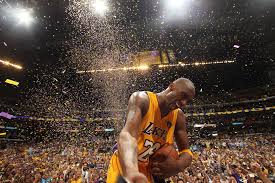
I will miss him, but I will not stop loving the positive things he brought to me and other people.
I was bigger and faster than most kids in my grade, or at least I thought I was. I'm sure there were guys that were taller or stronger. I'm sure there might be some that were faster. At seventh grade, I was already roughly 6' tall and 200 lbs. I could dunk a volleyball and felt I could hold my own with any kind of foot race.
I was a bigger football fan than I was a basketball fan. I loved the gladiator-ness of football with the helmets, the hitting and tackling. I found the idea of raw physicality, speed, and agility intriguing, especially since it seemed that my body was hurtling towards a larger than average body and frame that might make for a good player. I honestly thought I could be one of those people.
However, the first opportunity to "prove" this for me would be in 7th grade basketball where, for the first time, cuts could be made, and there would be a chance that I may not get to participate in a sport that I had fallen more and more in love with.
Until this point my favorite NBA player had been Shawn Kemp. While he was on the Sonics, and I watched him play, I saw a specimen of an explosive athlete that was exciting in the way that he played. I wanted to do the things that he did, play above the rim and handle the ball with skill and flair. I honestly think if Kemp had been able to control his urges better, he might have been a LeBron type player before LeBron.
Then Kemp got traded to Cleveland, got rather rotund and decidedly less explosive, and I was without a real rooting interest in the NBA.
And THIS is when I would be introduced to Kobe Bryant.
My parents had just gotten DirecTV, and the internet would come soon after. We got a monthly physical TV guide book (they had those in '96), and Kobe made the cover, with the headline "Michael wasn't this good at 18."
You see, I was one of those kids that did NOT love Michael Jordan.
For my entire life, I had been told by the media of the time, friends, and seemingly every adult, that Michael Jordan was the best basketball player of all-time and perhaps the greatest athlete of all-time. For years I was told just the idea that another player could ever be as great as him was unfathomable.
I had a problem with these assumptions. It made it seem like Jordan was so far beyond everyone else that they didn't matter in a team sport, and that it diminished everything anyone else did.
I had a problem with them because it completely discounted the possibility of a future where someone else could do things as well as the past, so why bother trying?
I loved the players that dared to try and be the next great thing. The players that wanted to catch the ghosts of the greatest players of all time.
And no one exemplified that to me more than Kobe Bryant.
Now, I was already a voracious reader, devouring books, periodicals, comics, whatever contained an interesting story. But now I was entranced by the real life story of a prodigy that came into the NBA from my home state and had a chance to become something incredibly special.
I read everything I could on his life in newspapers or Sports Illustrated, or ESPN the magazine. I read the beat reports from the L.A. Times, the Sacramento Bee and the Dallas Morning News. I watched his highlights anytime I could find some time on the internet.
I read stories of his upbringing in Italy, his high scores on the SAT that would enable him to attend any University on his intelligence alone. His maturity for a high school kid was mentioned by everyone, as was his almost supernatural confidence in himself and his future.
There was just something about the way he played the game that made you feel like you were watching something truly incredible. Here was a kid, dominating against guys that were much older, but didn't back down. More than that, it felt like everyone knew he was just getting started. His blend of size, quickness, skill, and intelligence that he already had at 18 seemed like he would be destined to become one of the greats.
When I watched Kobe, I felt like I was watching a myth of a person become reality. The skill, athleticism, work ethic. It was a story of a legend.
As his career started and my life continued, I'll always remember where I was when certain things happened.
When he experienced all of his highs and lows, I was often experiencing my own.
When Kobe came in the league in 1996 he won the dunk contest. I made and started on my seventh grade team.
In the summer of 2000, Kobe would win his first Championship. I would start as a junior for my high school's varsity football team.
In 2002, The Lakers completed their three peat. I would become a walk-on at Penn State football.
Oddly enough, even the struggles of Kobe mirror my own.
When Kobe was charged with sexual assault, I went through my first real encounter with disappointment when I felt I had to leave the Penn State football program to focus more on my studies and to give up on the dream of football being a real avenue for myself.
When Shaquille O'Neal was traded, and Kobe found himself trying to figure out his game without Shaq, I found myself struggling to form my identity without football.
When Kobe found himself again in 2008, I had done the same. Finding a job that I loved with a group of people I genuinely enjoyed working with.
In his final game as only he could, he gave everyone what they wanted one last time in a 60 point out of time performance. It seemed to sum up everything about him in one night. Two months later, I would be married to my loving wife.
To me, Kobe is personal. And I've put off writing about him because he's so personal to me. He was my hero since age twelve, when a young boy is allowed to have them. I don't think my writing can ever do the justice he deserved when it comes to specifically inspiring me. How his existence allowed me to dream through him. How he allowed me to imagine the impossible through him.
I cried for the first time about two hours after hearing the news, just like I'm crying now as I write this. It was the kind of tears that just can't stop and be held back even though you know it changes nothing. They come no matter how hard you try to tell yourself, "No."
But eventually, those tears subside, and you begin to think about all the good you have in your life that was brought before those tears started, and all the things that can happen in the future.
Right now, I think about the basketball program in my backyard, so to speak. Penn State men's basketball program is going through something that I think is pretty special. It is a team that, now, many think has a chance of advancing in the NCAA tournament. It is led by senior Lamar Stevens, who hails from Philadelphia and also idolized Bryant and no doubt has his own unique Kobe stories.
I like to think that right now, if Kobe were to pick a team that exemplified him, he would pick this Penn State squad. A squad that was talented, but still worked hard. A team that might have failed before, but has learned from those failures. A team that might be flawed, but might still be every bit a champion.
I will miss him, but I will not stop loving the positive things he brought to me and other people.
Subscribe to:
Posts (Atom)